
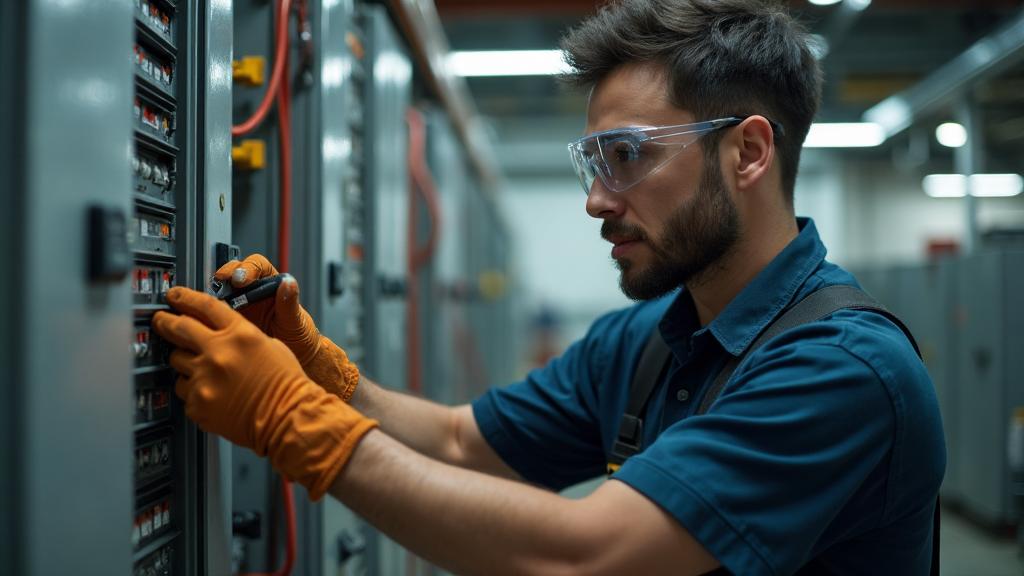
Electricians power everything around us — homes, businesses, hospitals, and the growing world of solar and clean energy. It's a skilled trade with steady demand, plenty of variety, and a clear path you can start in less than a year. If you've been wondering how to become an electrician in California, this guide breaks down the steps, the state's certification rules, and how National Career Education (NCE) in Citrus Heights helps you build the hands-on skills to get started in the Sacramento area.
What Does an Electrician Do?
Electricians install, maintain, and repair electrical systems in residential, commercial, and industrial settings. That can mean wiring a new home, upgrading a commercial building's power system, installing solar panels, troubleshooting electrical faults, bending and installing conduit, or working with motor controls. The trade blends problem-solving, hands-on skill, and a strong emphasis on safety and code compliance.
Because electrical work touches nearly every building and industry, electricians can find opportunities across many sectors — from home construction and remodeling to commercial contracting, facilities maintenance, and renewable energy. It's a career built on practical skills that transfer wherever you go.
The trade also appeals to people who like variety and problem-solving. One day you might be running new circuits on a construction site; the next you could be diagnosing a fault in an older building or installing a solar-ready panel. Because electricity powers so much of modern life, the skills you build are portable and in steady demand — and the field keeps evolving as clean energy, electric vehicles, and smart-building technology expand the kind of work electricians do.
Understanding California's Electrician Certification Rules
California has specific rules for people who perform electrical work for licensed contractors, so it's worth understanding the path before you start.
Under California law, electricians who make connections of greater than 100 volt-amps for C-10 licensed electrical contractors are required to be certified by the California Division of Labor Standards Enforcement (DLSE). To become certified, an applicant must have the required work experience and pass a certification examination. For a General Electrician, that experience requirement is 8,000 hours of work for a C-10 electrical contractor installing, constructing, or maintaining electrical systems covered by the National Electrical Code.
If you don't yet have enough experience to take the certification exam, California provides a clear on-ramp: you can legally perform electrical work for a C-10 contractor by registering as an electrician trainee. To do this, you must be enrolled in a state-approved school and work under the supervision of a certified electrician. This is exactly where a training program like NCE's comes in — and NCE assists students in obtaining their Electrician Trainee (ET) Card within the first few months of the program.
Because these requirements are set by the state and can change, always confirm the current rules with the California DLSE. NCE's admissions team can also help you understand how the program fits into this pathway.
What You'll Learn in NCE's Electrician Program
NCE's Electrician program is a 720-hour diploma program designed to prepare you for entry-level employment as a residential, commercial, or industrial electrician. The program is intentionally hands-on: at least half of the course is "hands-on," with students taking an active role in the actual wiring of residential and commercial electrical installations.
The program is built around six courses, each 120 clock hours:
- ELC 101 — Introduction to Electrical Theory: electron theory, voltage and current (AC and DC), resistance, inductance, circuit design, industry safety practices, Ohm's law, magnetism, and transformers.
- ELC 102 — Introduction to NEC and Blueprints: reading residential and commercial blueprints, electrical symbols and specifications, and an introduction to the National Electrical Code.
- ELC 103 — Residential Wiring: wiring skills for homes and small buildings, from the main panel throughout the building, including permits and inspections.
- ELC 104 — Residential Panels and Solar: bringing power to a building, underground and overhead service installations, and alternate power sources such as solar and auxiliary generation, plus troubleshooting.
- ELC 105 — Commercial Wiring and Conduit: commercial wiring methods, reading commercial blueprints, code requirements, and hands-on conduit bending and installation.
- ELC 106 — Commercial Power and Motor Control: commercial power systems and motor control.
Every course includes hands-on lab components that reinforce the concepts and teach industry-standard practices.
Certifications and Tools You'll Take With You
NCE's Electrician program also prepares students to obtain their OSHA 10 Card and their Ladder Safety and Lock Out Tag Out certifications. Students prepare for and take the required exams during the program, and NCE pays for the first attempt for each one. Obtaining these certifications is not a condition of graduation, but they're highly valued by employers.
There's also a nice bonus: completion of this program requires the use of hand tools, which NCE provides for classroom use — and upon graduation, NCE provides each student with their own toolkit to keep. That means you leave the program not just with skills, but with the tools to start using them.
How Long Does It Take to Become an Electrician?
At NCE, the Electrician program has a normal length of 36 weeks for full-time students, structured as six modules of six weeks each. Classes run five hours per day (or five hours per night for evening students), Monday through Thursday — so both day and evening schedules are available to fit around work and family.
The program is offered as a traditional in-classroom program or a hybrid online program. In the hybrid format, part of the coursework is completed online and part in the classroom, but the curriculum and weekly time commitment (about 20 hours of lecture and lab per week) are the same in either format.
Why Train as an Electrician in Citrus Heights and Sacramento
National Career Education is located at 6249 Sunrise Blvd, Citrus Heights, CA 95610, in the greater Sacramento area. The region's ongoing construction, remodeling, facilities work, and growth in solar and clean energy all contribute to steady demand for skilled electrical workers. Training locally lets you build connections in the same community where you'll be looking for work.
According to the U.S. Bureau of Labor Statistics (BLS) Occupational Outlook Handbook, employment of electricians is projected to grow much faster than the average for all occupations over the coming decade, driven in part by increased demand for alternative energy sources and the electrical infrastructure to support them. (Note: this refers to projected job growth and overall industry demand, not to earnings.)
NCE is accredited by the Accrediting Council for Continuing Education & Training (ACCET), and is approved to operate by the California Bureau for Private Postsecondary Education (BPPE). For program outcomes information, review the official School Performance Fact Sheets at /consumer-information.
Frequently Asked Questions
How long does it take to become an electrician in California?
At NCE in Citrus Heights, the Electrician program is a 720-hour diploma program with a normal length of 36 weeks for full-time students — six modules of six weeks each. Both day and evening schedules are available. Keep in mind that California's General Electrician certification also requires accumulating work experience (8,000 hours for a C-10 contractor) and passing a state exam.
What is an Electrician Trainee (ET) card, and how do I get one?
An electrician trainee registration allows you to legally perform electrical work for a C-10 contractor while you build the experience needed for certification. To qualify, you must be enrolled in a state-approved school and work under the supervision of a certified electrician. NCE assists students in obtaining their ET card within the first few months of the program.
Do I need a license to work as an electrician in California?
Electricians who make connections greater than 100 volt-amps for C-10 licensed electrical contractors must be certified by the California Division of Labor Standards Enforcement, which requires the necessary experience and passing a certification exam. Enrolling in a state-approved program and registering as an electrician trainee is a common first step. Always confirm current requirements with the state.
Does NCE provide tools for the Electrician program?
Yes. NCE provides hand tools for classroom use during the program, and upon graduation provides each student with their own toolkit to keep.
Where can I find NCE's Electrician program outcomes?
Program outcomes are published in the official School Performance Fact Sheets, which you can review at /consumer-information.
Ready to Start Your Electrician Career in Sacramento?
If you're ready to learn how to become an electrician in California, National Career Education in Citrus Heights can help you take the first step. Our Electrician program is hands-on from day one, helps you obtain your Electrician Trainee card, and sends you off with your own toolkit and industry safety certifications.
Call NCE today at (916) 969-4900 to speak with an admissions representative, or learn more and schedule a campus tour on our Electrician program page.