
Electrician
Build a solid foundation in electrical systems with comprehensive training in residential, commercial, and industrial electrical work.
720 Clock Hours
Program Length
Certification Preparation
Industry Recognized
Small Classes
Personal Attention
Career Services
Job Placement Help
720 Hours · As Few as 9 Months
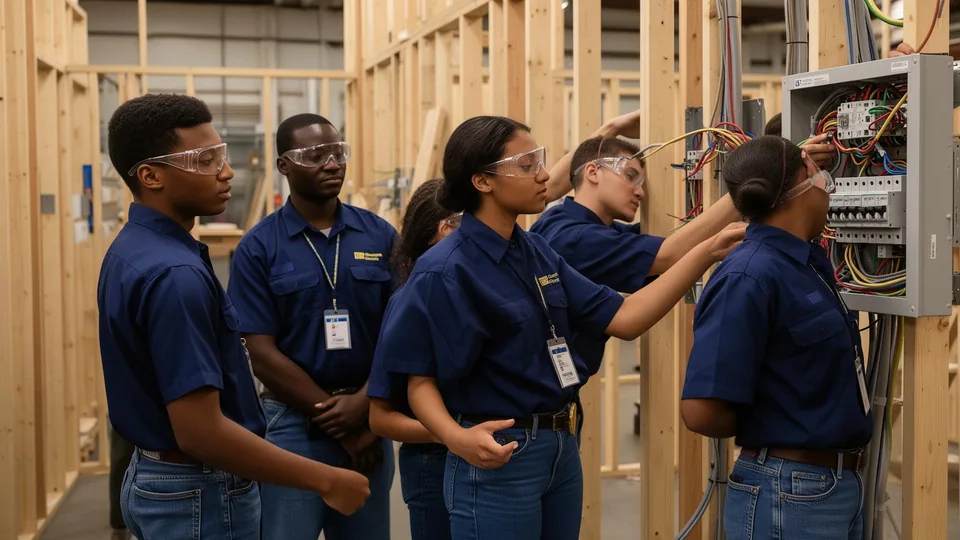
Prepares students with the necessary skills for entry-level employment as a residential, commercial, or industrial electrician. At least half of the program is hands-on, with students taking an active role in actually wiring residential and commercial electrical installations.Hands-On Wiring (50%+ Lab)
Six 6-week modules totaling 720 clock hours (384 lecture · 336 lab). Day or evening classes available, 5 hours per day, Monday through Thursday. Delivered in-classroom or hybrid online.OSHA 10 + ET Card Support + Free Toolkit
Prepares students for the OSHA 10 Card, Ladder Safety, and Lock Out / Tag Out certifications. NCE also assists students in obtaining their Electrician Trainee (ET) Card and provides each graduate with their own toolkit at graduation.
Request Information
Fill out the form below — no obligation
Financial aid for those who qualify.
Learn MoreProgram Overview
Our Electrician program provides the knowledge and hands-on skills needed to work in the electrical trade. You'll learn electrical theory, NEC code requirements, wiring methods, motor controls, and troubleshooting techniques. At least half of the program is hands-on. NCE assists students in obtaining their Electrician Trainee (ET) Card and provides each graduate with their own toolkit at graduation.
The Electrician program is offered at our Citrus Heights campus, where small classes and hands-on labs are part of an ACCET-accredited career training environment. Tuition assistance is available through our financial aid options for those who qualify, and graduates receive ongoing support from our career services team. Learn about employer partnerships at NCE. Ready to apply? Review the steps on our admissions and enrollment page.
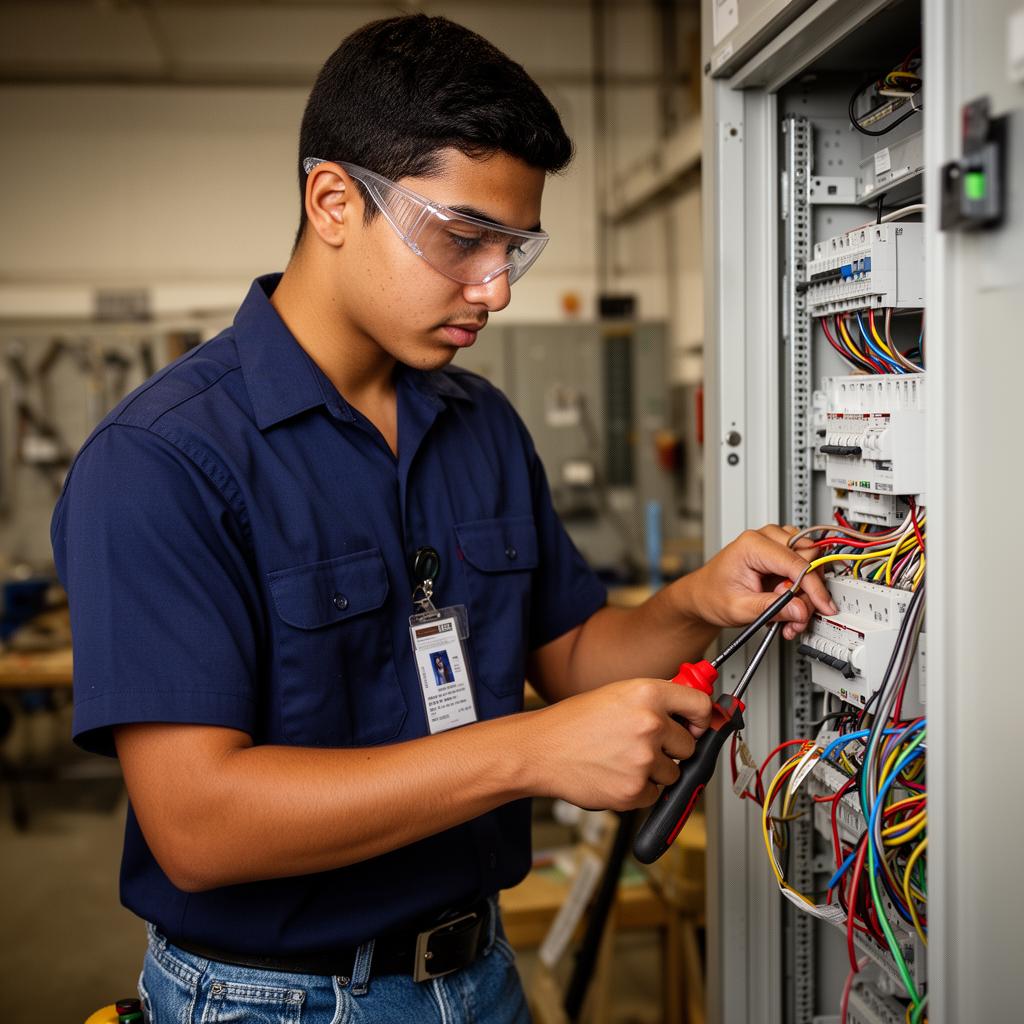
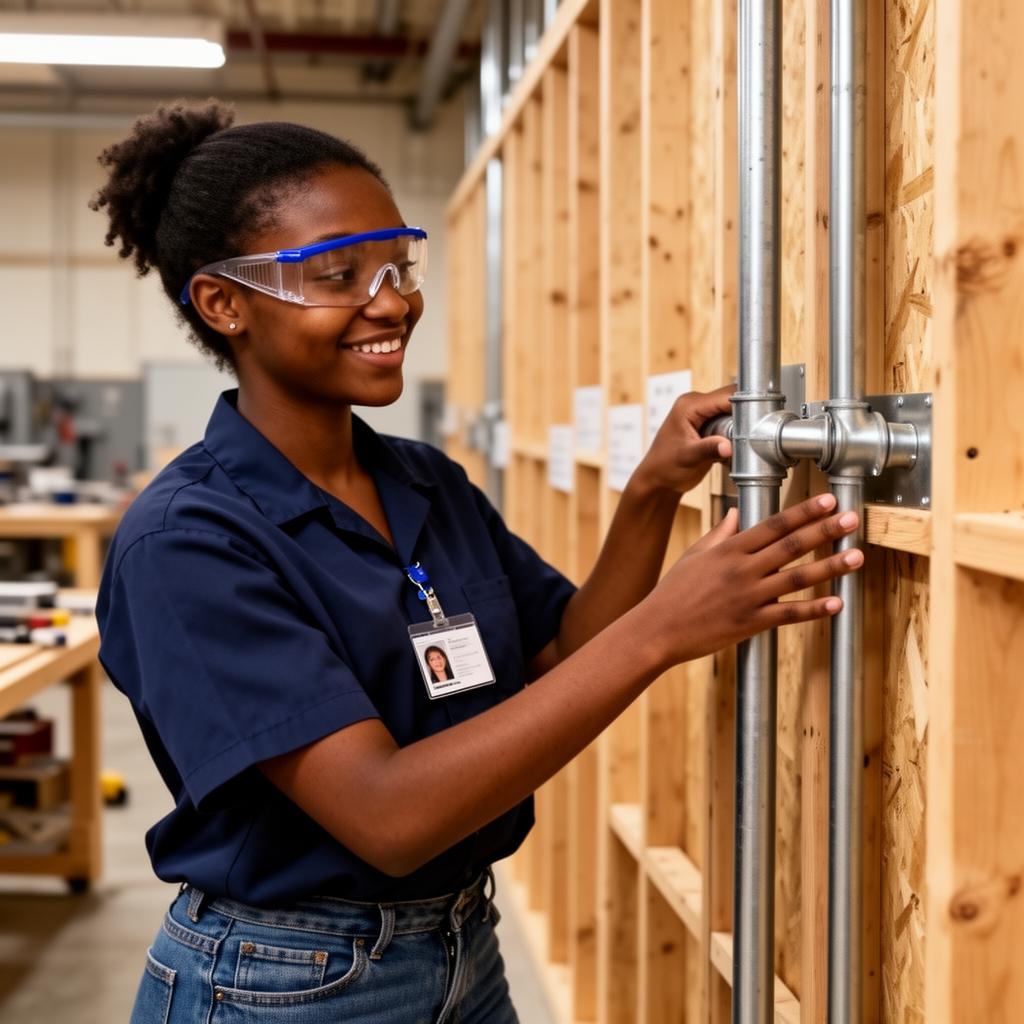
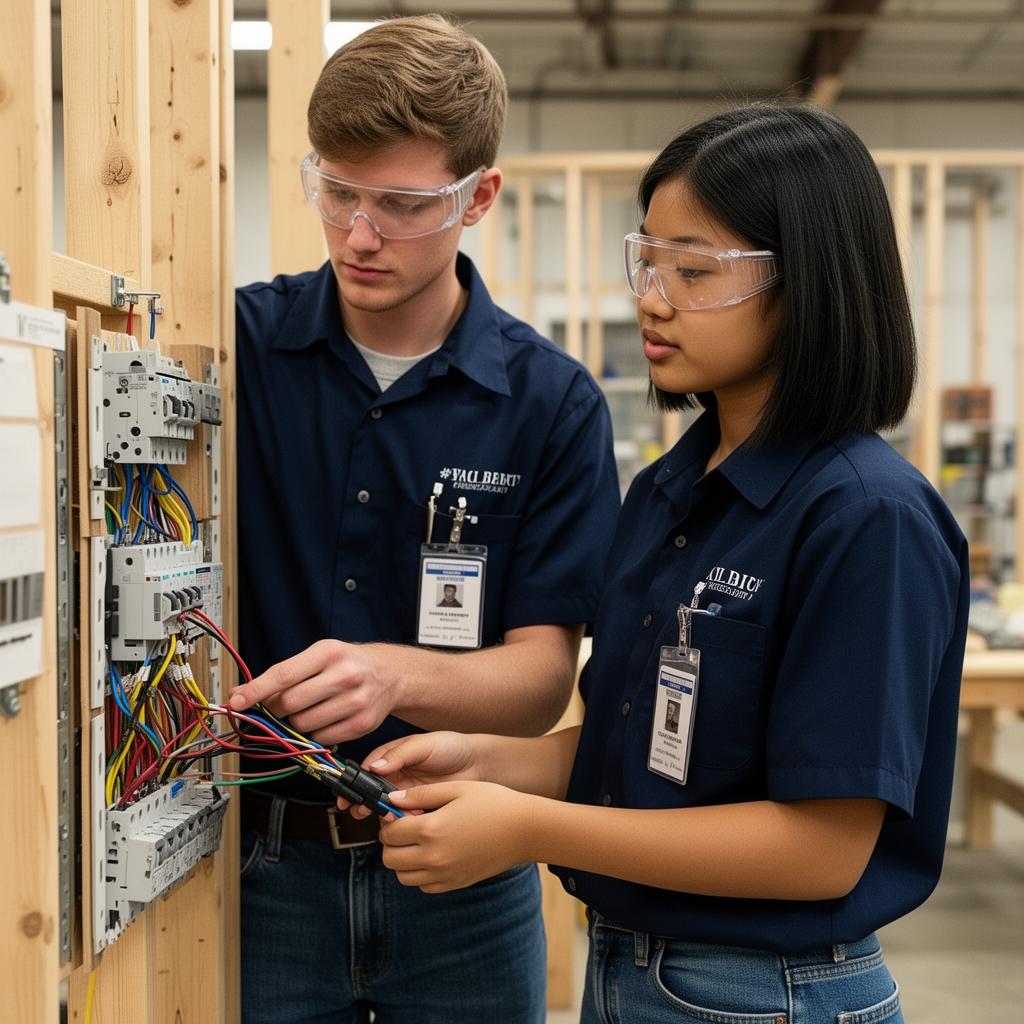
Hands-On Training
Get real-world experience in our industry-standard training facilities.
Curriculum Highlights
Certifications This Program Prepares You For
Certification preparation is distinct from earning a professional credential; candidates must meet the credentialing organization's requirements.
Electrician Trainee (ET) Card Support
California Division of Labor Standards Enforcement
NCE assists students in obtaining their Electrician Trainee (ET) Card within the first few months of the program.
OSHA 10 Card
Occupational Safety and Health Administration (OSHA)
Industry-standard safety training covering hazard recognition and safe work practices.
Ladder Safety & Lockout/Tagout (LOTO) Certifications
Industry safety certifications
Certifications in ladder safety and lockout/tagout procedures for controlling hazardous energy.
Where This Career Path Can Take You
Explore the career paths and advancement opportunities available after completing this program.
Electrician Helper
Assist journeyman electricians with installations and repairs.
Electrical Apprentice
Work toward journeyman license while gaining hands-on experience.
Journeyman Electrician
Independently install, maintain, and repair electrical systems.
Master Electrician / Contractor
Lead projects, start your own business, or manage electrical teams.
Request Information
Fill out the form below — no obligation
Financial aid for those who qualify.
Learn MoreCourse & Module Breakdown
NCE's Electrician program at our Citrus Heights campus totals 720 clock hours (384 lecture · 336 lab). Below is what students cover in each module:
ELC101 — Introduction to Electrical Theory120 hours · Prerequisite: No prerequisite
Introduces basic electrical concepts, imparting an understanding of electron theory versus the conventional theory of electricity, voltage and current (both AC and DC), resistance, inductance, and common units of electrical measurement. Covers basic circuit design, industry safety practices, basic tools and work practices, principles of electrical generation, and the operation of transformers. Other topics include common circuit requirements, harmonics, Ohm's Law, magnetism, and mathematical concepts and formulas related to AC sine waves and three-phase circuits. Includes hands-on lab components.
ELC102 — Introduction to NEC and Blueprints120 hours · Prerequisite: No prerequisite
Teaches students to read, understand, and use residential and commercial blueprints through the study of symbols and specifications associated with the electrical field. Introduces the National Electrical Code, including the history and evolution of electrical codes in the United States, the proper use and implementation of the NEC, and the relationship of the NEC to local, state, and federal codes. Includes hands-on lab components.
ELC103 — Residential Wiring120 hours · Prerequisite: ELC101, ELC102
Teaches basic wiring skills and techniques for residential and small buildings, with emphasis on wiring from the main panel to the entire building. Includes the process for issuance of permits through final inspection, and focuses on the use of hand tools, power tools, and basic installation techniques. Introduces NEC requirements for residential wiring and the role of inspection at the local level. Includes hands-on lab components.
ELC104 — Residential Panels and Solar120 hours · Prerequisite: ELC101, ELC102
Teaches the basic wiring skills of introducing power to a residence or small building, including underground and overhead electrical service installations and the introduction of alternate power sources such as solar and auxiliary power generation. Introduces troubleshooting of residential electrical faults and the NEC codes associated with providing power to residences and small buildings. Includes hands-on lab components.
ELC105 — Commercial Wiring and Conduit120 hours · Prerequisite: ELC101, ELC102
Introduces commercial wiring methods, including reading and understanding blueprints used in commercial applications and the proper use and identification of materials for commercial electrical work. Teaches code requirements for commercial applications and the ability to calculate service, feeder, and branch circuit requirements. Establishes the hands-on skills needed to properly bend and install conduit and associated electrical equipment.
ELC106 — Commercial Power and Motor Control120 hours · Prerequisite: ELC101, ELC102
Introduces three-phase electrical distribution systems, including intermediate principles and concepts commonly used by electricians. Teaches calculations, hands-on hookup techniques, and code requirements for properly installing transformers and motors, and establishes principles of proper maintenance and troubleshooting. Provides a solid background in AC and DC single-phase and three-phase motor operation, with emphasis on operational theory, design, sizing, characteristics, and code requirements.
Tuition, Requirements & Program Disclosures
Review the published tuition, fees, textbook information, admissions policies, and program requirements before choosing a program. Read the student catalog together with its current addendum; the addendum includes cancellation-policy updates and Personal Fitness Trainer program information. Admissions can explain the requirements and costs that apply to your intended program.
Career Outcomes
Training focuses on technical skills used in installation, service, troubleshooting, and maintenance roles. Graduates of NCE's Electrician program may pursue entry-level job titles such as those below, depending on the role's requirements and any additional credentials.
- Electrician
- Electrician Apprentice
- Maintenance Electrician
- Residential Electrician (entry-level)
- Commercial Electrician (entry-level)
- Electrical Helper
- Lighting Technician
- Building Electrical Maintenance Technician
Note: This list reflects examples of entry-level job titles graduates may pursue. NCE does not promise or guarantee employment to any student or graduate. Some entry-level positions may require additional certifications, background checks, drug screenings, or state licensure not provided by the NCE program.
Learn more about career services support for NCE graduates, review admissions and enrollment steps, or explore financial aid options for those who qualify.
Training for an Electrician Career in the Sacramento Region
The greater Sacramento area — including Citrus Heights, Roseville, Folsom, and Rancho Cordova — has active residential and commercial construction along with ongoing demand for qualified electricians for maintenance, service, and new installations.
NCE's Electrician program at our Citrus Heights campus is structured around hands-on training, with at least half of the program spent in the lab. Students complete projects covering residential, commercial, and motor-control wiring. NCE assists students in obtaining their Electrician Trainee (ET) Card and provides each graduate with their own toolkit at graduation.
NCE's Citrus Heights campus is located at 6249 Sunrise Blvd, Citrus Heights, CA 95610, serving students from across the greater Sacramento region including Roseville, Folsom, Rancho Cordova, Antelope, and North Highlands. Explore all NCE programs or learn how financial aid is available to those who qualify.
Important Disclosures
- NCE offers career education and training. NCE does not offer employment.
- NCE does not promise or guarantee employment to any student or graduate.
- Career outcomes are not guaranteed and vary based on individual circumstances.
- Some entry-level positions may require additional certifications, examinations, background checks, drug screenings, and/or state licensure that are not part of the NCE program.
- Financial aid is available to those who qualify.
- National Career Education is accredited by the Accrediting Council for Continuing Education & Training (ACCET).
Related at National Career Education
Continue exploring how National Career Education supports Electrician students from enrollment through graduation.
Frequently Asked Questions
How long is NCE's Electrician program?
What does the curriculum cover?
Does the program prepare students for California electrician licensure?
What hands-on training is included?
What are the admission requirements?
Is financial aid available?
Where can I review tuition, fees, and program disclosures?
Explore Other Programs
Not sure if this program is right for you? Check out our other career training options.
View All Programs