
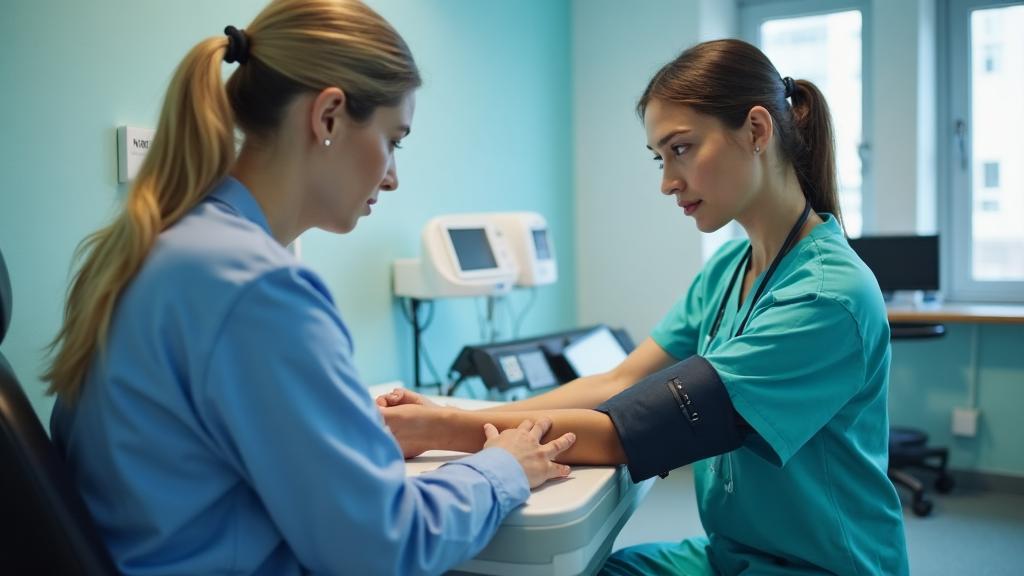
If you want a hands-on healthcare career that you can train for in under a year, phlebotomy is one of the best places to start. Phlebotomists are the professionals who draw blood for tests, transfusions, research, and donations — a skill that clinics, hospitals, and labs across California rely on every day. This guide explains how phlebotomy training works in California, what the state requires for certification, and how National Career Education (NCE) in Citrus Heights prepares students for this career through its Lab Assistant, EKG Technician & Phlebotomist program.
What Does a Phlebotomist Do?
At its core, phlebotomy is the practice of collecting blood samples safely and accurately. Phlebotomists perform venipuncture (drawing blood from a vein) and capillary or skin punctures, label and handle specimens, follow strict safety and infection-control procedures, and help put patients at ease during the draw.
At NCE, phlebotomy is taught as part of a broader Lab Assistant, EKG Technician & Phlebotomist program, which means graduates are prepared for more than one role. In addition to phlebotomy, students learn several laboratory procedures in hematology, bacteriology, urinalysis, and electrocardiography, and they learn to take vital signs. Graduates develop appropriate communication skills and become CPR certified as part of the program. That combination of skills — blood draws, lab work, and EKG — makes graduates flexible candidates for entry-level positions as an EKG Technician, Laboratory Assistant, or Phlebotomist.
How to Become a Certified Phlebotomist in California
California is one of the few states that requires phlebotomists to be certified by the state. To work as a phlebotomy technician in California, a person must hold a current and valid certification from the California Department of Public Health (CDPH). This is an important detail for anyone researching phlebotomy training in California — completing an approved training program is a key step toward meeting the state's requirements.
For a person without any prior phlebotomy experience, California's requirements for a Certified Phlebotomy Technician I (CPT1) include:
- Completing 40 hours of phlebotomy classroom training from an approved school,
- Completing 40 hours of phlebotomy practical training that includes at least 50 venipunctures and 10 skin punctures, plus observation of arterial punctures, and
- Passing an approved phlebotomy certification exam.
Because these requirements are set and periodically updated by the CDPH, prospective students should always confirm the current rules with the state. NCE's admissions team can help you understand how the program's training fits into California's certification pathway.
What You'll Learn in NCE's Program
NCE's Lab Assistant, EKG Technician & Phlebotomist program is a 720-hour diploma program made up of seven modules (Modules A through G), each 80 clock hours. The modules may be taken in any sequence. Blood collection and venipuncture practice is reinforced throughout the program, so your skills build steadily with repetition.
Here's a snapshot of the coursework:
- Introduction to phlebotomy — related procedures, complications, special considerations for draws, and blood collection and venipuncture (Module A). Note: students must achieve 100% attendance to pass this module.
- Laboratory techniques — safety, isolation, hand washing, lab equipment and glassware, specimen handling, quality assurance, and medical asepsis (Module B).
- Anatomy, vital signs, and CPR (Module C).
- The urinary system, urinalysis, microscopic procedures, and chemistry (Module D).
- Blood cells and hematology, coagulation studies, and medical law and ethics (Module E).
- Pharmacology, drug testing, microbiology, and serology (Module F).
- The cardiovascular system, electrocardiography, arrhythmia interpretation, and specialized cardiac procedures (Module G).
Certification Exams the Program Prepares You For
Beyond meeting California's state certification pathway, NCE's program prepares students to take the National Certified Phlebotomy Technician (NCPT) exam and the National EKG Certification (NEKG) exam, and the school pays for the first attempt at each. Passing these exams is not a condition of graduation. California phlebotomy certification requires a national examination approved by CDPH; completing NCE's program or passing a national exam does not by itself grant state certification. Other certification expectations vary by role and employer. Check CDPH's current application requirements and the requirements of the position you intend to pursue.
The Externship: Practice in a Real Setting
After completing the classroom coursework, students move on to an externship — 160 clock hours (about eight weeks) at an approved site. The externship provides a realistic work environment where you apply the skills you learned in the classroom under the supervision of on-site staff. You'll document your hours with weekly timesheets signed by your supervisor, and all externship hours must be completed to finish the program.
Because externship sites frequently require background checks, physical or lab exams, drug tests, and proof of immunizations, it helps to start preparing for those steps early. NCE's team can guide you through what to expect.
The externship is also a valuable chance to get comfortable with the pace and routine of a real workplace. You'll practice drawing blood from a wide range of patients, handling specimens correctly, and communicating with people who may be nervous about needles — the kind of everyday, on-the-job experience that builds the confidence employers look for in a new hire. Treating the externship as a professional audition, showing up on time and taking initiative, is one of the best ways to make a strong first impression in the field.
How Long Does Phlebotomy Training Take?
At NCE, the Lab Assistant, EKG Technician & Phlebotomist program has a normal length of 36 weeks for full-time students — seven four-week modules plus the eight-week externship, with classes held five hours a day, Monday through Thursday. Both day and evening classes are available, and the program is offered as a traditional in-classroom program or a hybrid online program. In the hybrid format, part of the coursework is online and part is in the classroom, but the curriculum and weekly time commitment (about 20 hours of lecture and lab per week) are the same.
Why Train for Phlebotomy in Citrus Heights and Sacramento
National Career Education is located at 6249 Sunrise Blvd, Citrus Heights, CA 95610, in the greater Sacramento area. Training locally means you build your skills — and gain real experience through your externship — in the same community where you'll be looking for work. The Sacramento region has a broad network of hospitals, clinics, laboratories, and blood-donation centers that depend on skilled phlebotomists and lab assistants.
According to the U.S. Bureau of Labor Statistics (BLS) Occupational Outlook Handbook, employment of phlebotomists is projected to grow faster than the average for all occupations over the coming decade, reflecting steady demand for laboratory testing across the healthcare system. (Note: this refers to projected job growth and overall industry demand, not to earnings.)
NCE is accredited by the Accrediting Council for Continuing Education & Training (ACCET), and is approved to operate by the California Bureau for Private Postsecondary Education (BPPE). For program outcomes information, review the official School Performance Fact Sheets at /consumer-information.
Frequently Asked Questions
How long is phlebotomy training in California at NCE?
NCE's Lab Assistant, EKG Technician & Phlebotomist program is a 720-hour diploma program with a normal length of 36 weeks for full-time students — seven four-week modules plus an eight-week externship. Day and evening classes are available.
Do I need to be certified to work as a phlebotomist in California?
Yes. California requires phlebotomy technicians to hold a current, valid certification from the California Department of Public Health (CDPH). For someone with no prior experience, the CPT1 pathway generally includes 40 hours of classroom training, 40 hours of practical training (with at least 50 venipunctures and 10 skin punctures, plus observation of arterial punctures), and passing a CDPH-approved national certification exam. Confirm current requirements directly with the CDPH.
What's the difference between a phlebotomist and a lab assistant?
A phlebotomist focuses on drawing blood, while a lab assistant supports a wider range of laboratory procedures. NCE's program trains students in phlebotomy, laboratory procedures (such as hematology, urinalysis, and bacteriology), and EKG, so graduates are prepared for entry-level roles as a Phlebotomist, Laboratory Assistant, or EKG Technician.
Does the program help me prepare for certification exams?
Yes. NCE prepares students for the National Certified Phlebotomy Technician (NCPT) and National EKG Certification (NEKG) exams and pays for the first attempt at each. Passing these exams is not a condition of graduation.
Where can I find NCE's program outcomes information?
Program outcomes are published in the official School Performance Fact Sheets, which you can review at /consumer-information.
Start Your Phlebotomy Training in the Sacramento Area
If you're ready to begin phlebotomy training in California, National Career Education in Citrus Heights can help you take the first step. Our Lab Assistant, EKG Technician & Phlebotomist program combines classroom learning with real hands-on practice and an externship, so you graduate ready for entry-level work in the Sacramento area's healthcare community.
Call NCE today at (916) 969-4900 to speak with an admissions representative, or learn more and schedule a campus tour on our Lab Assistant, EKG Technician & Phlebotomist program page.